
In January 2026, the United States Department of Justice (DOJ) released a massive final tranche of documents related to the late Jeffrey Epstein, marking the culmination of the Epstein Files Transparency Act. Comprising over three million pages of investigative records, the release has provided a definitive look at the FBI’s extensive probes into the financier and his social circle.
While media coverage has often blurred the lines between social proximity and criminal complicity, a closer examination of the “Trump involvement” reveals a consistent pattern: a lack of corroborating evidence, a reliance on anonymous and often politically motivated tips, and explicit statements from federal investigators and Epstein’s own legal team that the president was never a participant in the criminal enterprise.

The FBI Files: Anonymous Tips and Unverified Claims
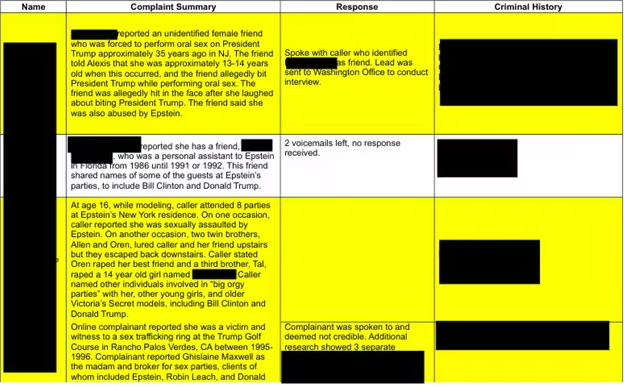
A central component of the 2026 release is a 2025 FBI summary detailing calls made to the National Threat Operations Center (NTOC) and various hotlines. These logs show that investigators were inundated with tips targeting Donald Trump. However, the DOJ’s official statement accompanying the release was unequivocal:
“Some of the documents contain untrue and sensationalist claims against President Trump that were submitted to the FBI right before the 2020 election. To be clear, the claims are unfounded and false.”
The files highlight that while federal agents are required to log every tip, the vast majority regarding Trump were categorized as unverified, second-hand, or lacking in basic credibility. Many of these tips were submitted anonymously via the internet during periods of high political tension. In every instance where the FBI attempted to find corroboration—such as physical evidence, victim testimony, or travel logs—the trail went cold.
Unlike other figures mentioned in the files, where specific victims provided sworn testimony regarding interactions, no victim of Epstein who has gone public has accused Trump of any wrongdoing.
Media Narratives: TMZ, Newsbreak, and CNN
Despite the DOJ’s clarification that many of these tips were unfounded, several media outlets have been criticized for their framing of the documents. Critics argue that outlets like CNN, TMZ, and Newsbreak have circulated headlines that imply deeper involvement, often omitting the context that the FBI found no evidence to support the claims.
- CNN’s Contextual Omissions: Analysts point out that CNN’s coverage often highlights the existence of the tips without emphasizing the FBI’s conclusion that they were “unfounded.” This creates a narrative of suspicion rather than one of exoneration.
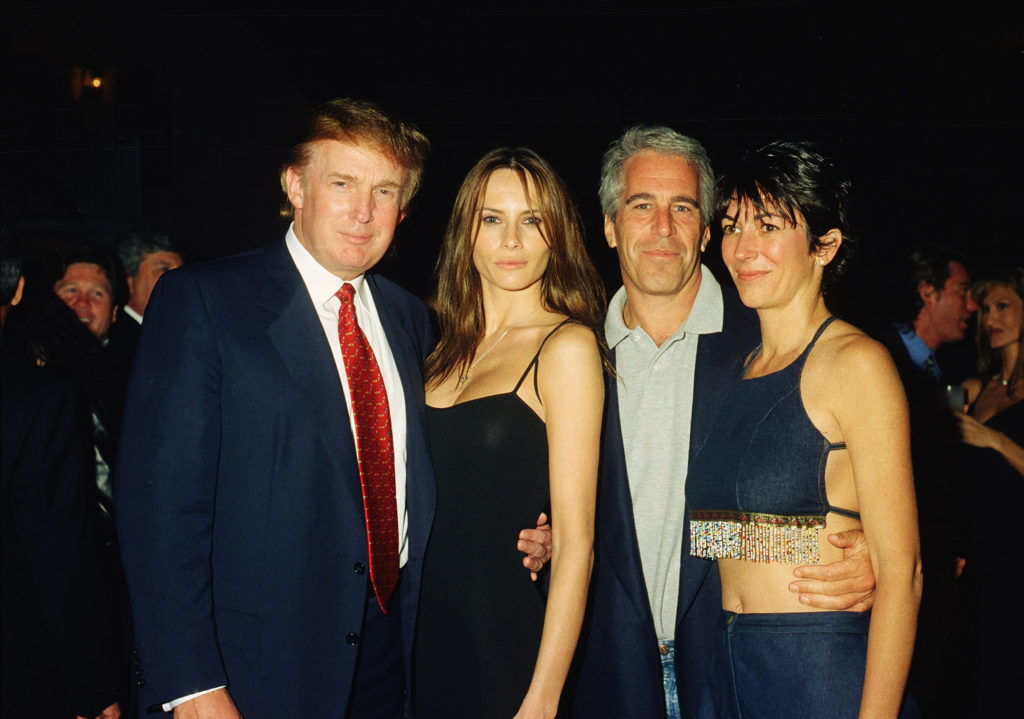
- TMZ and Newsbreak: These platforms have been accused of prioritizing “clickbait” by using images of Trump and Epstein together from the 1990s as thumbnails for stories about the new files, even though the 2026 documents focus on periods long after their fallout.
- Political Framing: Supporters of the president argue that this selective reporting is intended to provide a narrative for the political left, keeping the association alive in the public consciousness despite the legal findings proving the accusations false.

The 2003 Fallout: The Mar-a-Lago Ban
A critical piece of the 2026 release—and one often ignored by the mainstream narrative—is the documented end of the Trump-Epstein friendship. While many outlets suggest they remained close for decades, the files and contemporary testimonies confirm a hard break occurred over 20 years ago.
In 2003, reports surfaced regarding Epstein’s behavior at Trump’s Mar-a-Lago resort. Records from the club and statements from former staff indicate that Epstein was accused of inappropriately approaching or assaulting a guest at the club. Upon learning of the behavior, Trump took decisive action. He did not merely distance himself; he removed Epstein from the premises and permanently banned him from all Trump properties.
This incident served as the catalyst for the total termination of their social connection. Following the 2003 ban, Trump famously declared Epstein persona non grata. In the years that followed, as Epstein’s legal troubles began to mount in 2005 and 2008, Trump remained one of the few former social associates who did not come to his defense or maintain private contact.
The Dershowitz Testimony: Zero Leverage
Alan Dershowitz, the prominent constitutional lawyer who represented Epstein during his 2008 non-prosecution agreement, has been vocal about Trump’s status. Dershowitz’s argument centers on a cold, legal reality: leverage. Epstein was a man who famously collected “dirt” on his associates to use as insurance against prosecution.
Dershowitz has pointed out that if Epstein had possessed even a shred of incriminating evidence against a figure as powerful as Donald Trump, he would have used it as his primary bargaining chip to avoid his 2019 arrest.
“Epstein said no, there is nothing at all on Donald Trump,” Dershowitz noted in recent interviews. He emphasized that Epstein was often boastful about his connections, but when it came to criminal complicity, Trump’s name was never part of the ledger.
Conclusion
The release of the Epstein files in 2026 has served as a Rorschach test for the American public. To those seeking a “client list,” the mentions of Donald Trump provide fodder for headlines. However, for those looking at the legal and evidentiary standard, the files tell a different story.
Between the DOJ’s admission that tips against him were “sensationalist” and “false,” the documented 2003 ban from Mar-a-Lago, and the total lack of victim testimony, the files provide a robust exoneration. In a case defined by secrets and leverage, the most telling fact remains: the man who knew everyone’s secrets had none to tell about Donald Trump.